
The Whirl Bookshelf
Why these five books sit under everything we do here
The Whirl of ReOrientation did not drop out of the sky. It rests on tight concepts from brilliant thinkers that rewired how we see strategy, economics, media, and the human condition. This page is the spine of The Whirl. If you want to understand why we talk the way we speak here, this is where it starts.
The order is not academic. It follows the path I actually walked. It begins with a small book on contrary thinking and ends with a thousand-page treatise on human action. In between are warfighters, media theorists, mystics, and economists, all wrestling with a single problem:
How do human beings make sense of reality, choose, act, and adapt when everything is moving?
These are not “nice to have” titles. If you want to operate differently from your competitors in chaotic environments, they are basic kit.
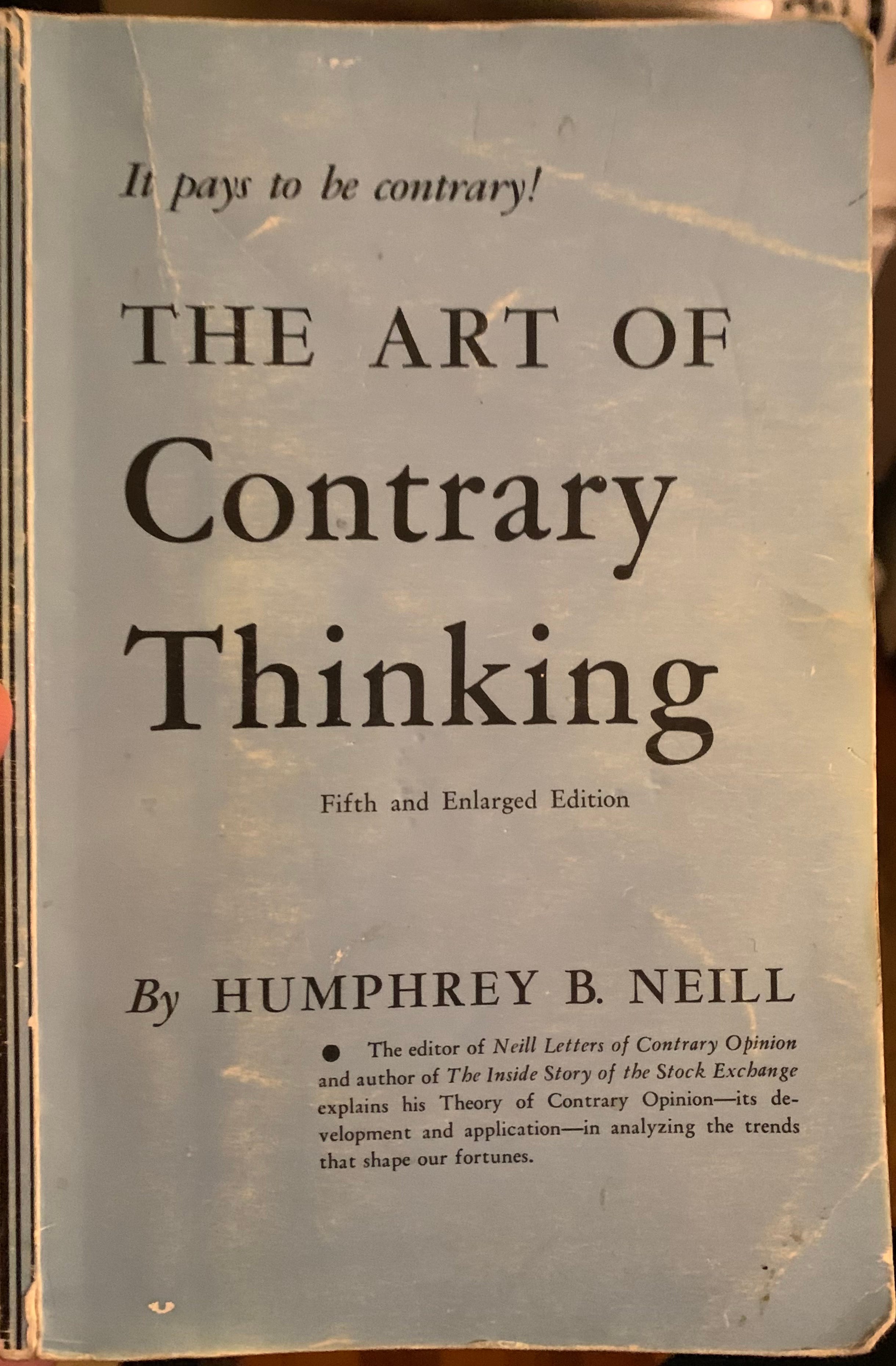
1. The Art of Contrary Thinking by Humphrey B. Neill
This is the book that started it for Mark McGrath | OODA Strategist in 2000. Neill writes for investors, but he is really writing about perception and crowd psychology. His claim is brutal in its simplicity: at critical turning points, crowds tend to be wrong, not because people are stupid, but because they are trapped inside the same assumptions, incentives, and emotional weather. He walks through real market cycles and shows how popular opinion, expert consensus, and what “everyone knows” can all line up in the wrong direction at the exact moment it matters most.
You read Neill to learn the habit of standing off to the side. He teaches you to separate facts from the emotional comfort wrapped around them and to ask a question most people never touch:
What if everyone thinking alike is wrong?
The Whirl factors in that mainstream narratives are late, distorted, or convenient for someone else. If you do not internalize that instinct, the rest of the shelf will hit softer than it should. This is a short, unpretentious book that cuts deeper than most modern “thought leadership.”
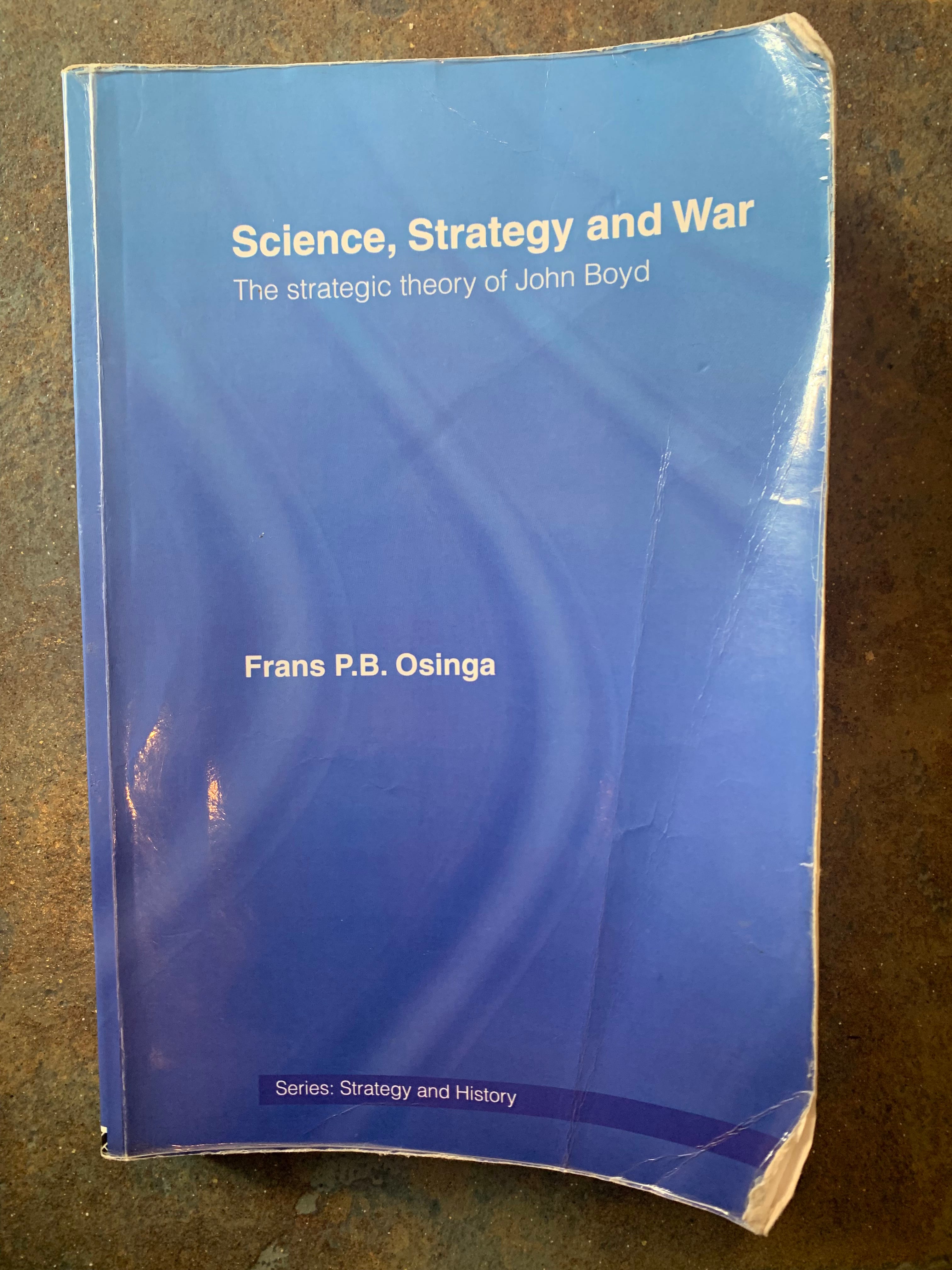
2. Science, Strategy and War: The Strategic Theory of John Boyd – Frans P. B. Osinga
Discourse on Winning and Losing is John Boyd’s raw briefing room. With Science, Strategy, and War, Frans Osinga gives us a long, careful walk-through of the concepts he taught. He ties Boyd’s work to physics, biology, epistemology, systems thinking, and military history. Osinga shows that this was never a “business buzzword” guy with a loop on a slide. Boyd was trying to explain how complex systems learn, compete, and collapse.
You read Osinga when you want to see what sits behind the OODA “loop” sketch. He maps Orientation to its scientific and philosophical roots and shows that it is not a step in a cycle, but the living core of how we generate hypotheses, test them, and learn. He brings in thermodynamics, evolution, and complexity theory, and then brings them back to practical strategy. The Whirl uses Boyd as a strategic philosopher, not a mascot. Osinga provides a structure that lets you do that without hand-waving. If you have ever looked at a four-step OODA diagram and felt something was severely wrong, this book explains why.
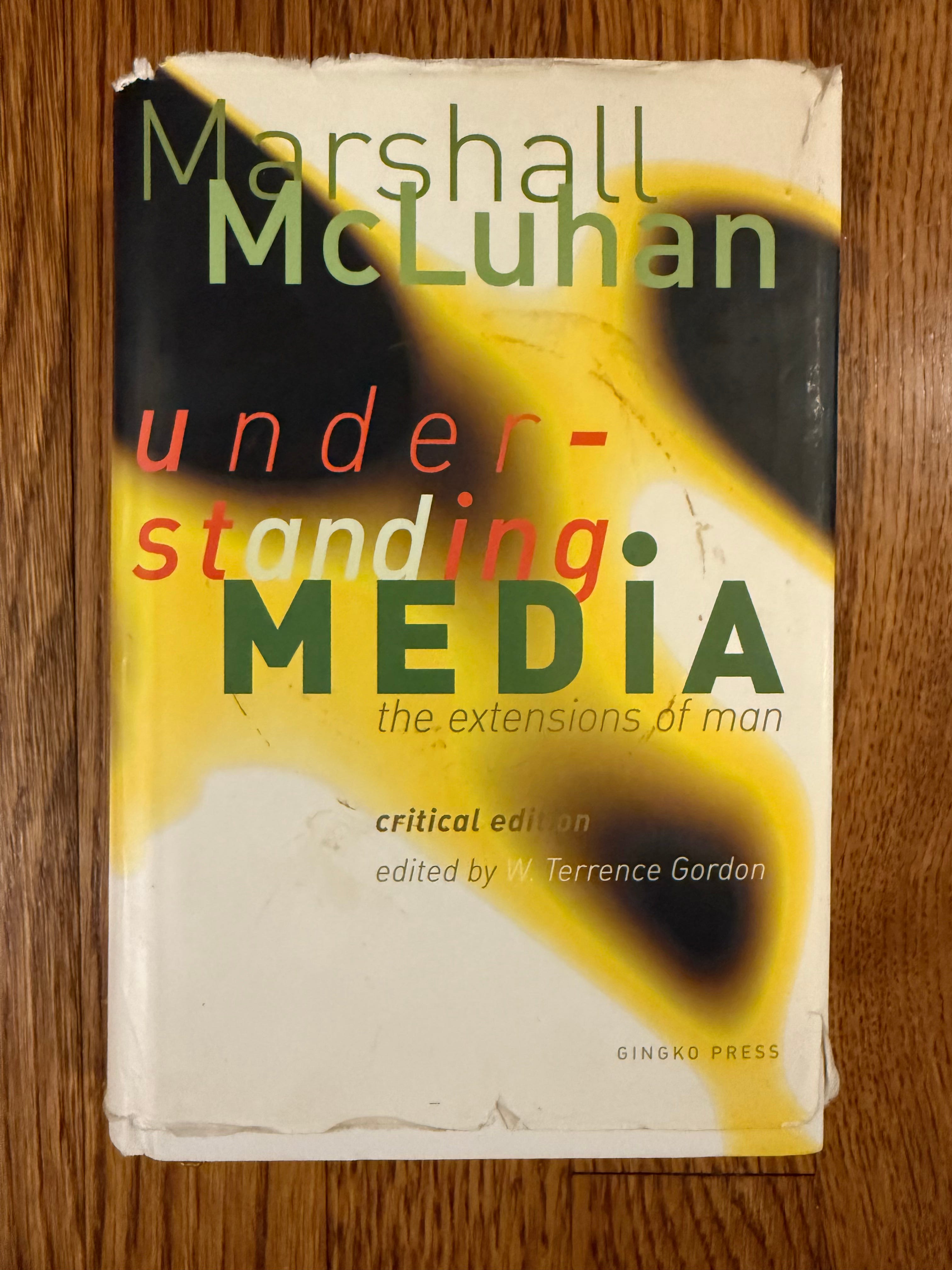
3. Understanding Media: The Extensions of Man – Marshall McLuhan
Marshall McLuhan overturns the way most people think about communication, but that’s only part of it. He argues that the form of a medium shapes perception and society far more than the slogans and stories that run through it. Print, television, radio, digital platforms, and now AI each reorganize our sense of time, space, and presence. The famous line is that “the medium is the message,” and the book shows what that actually means in daily life.
You read McLuhan to stop being hypnotized by “content.” He trains you to look at the environment a medium creates, and at the kind of person it rewards. Once you see that a medium is an extension of some human faculty, you start asking different questions about X, TikTok, Instagram, email, and Zoom. The Whirl lives at the intersection of strategy and media. You cannot understand modern conflict, culture, or politics if you treat platforms as neutral systems. This book gives you the lens to see the terrain instead of just the headlines.
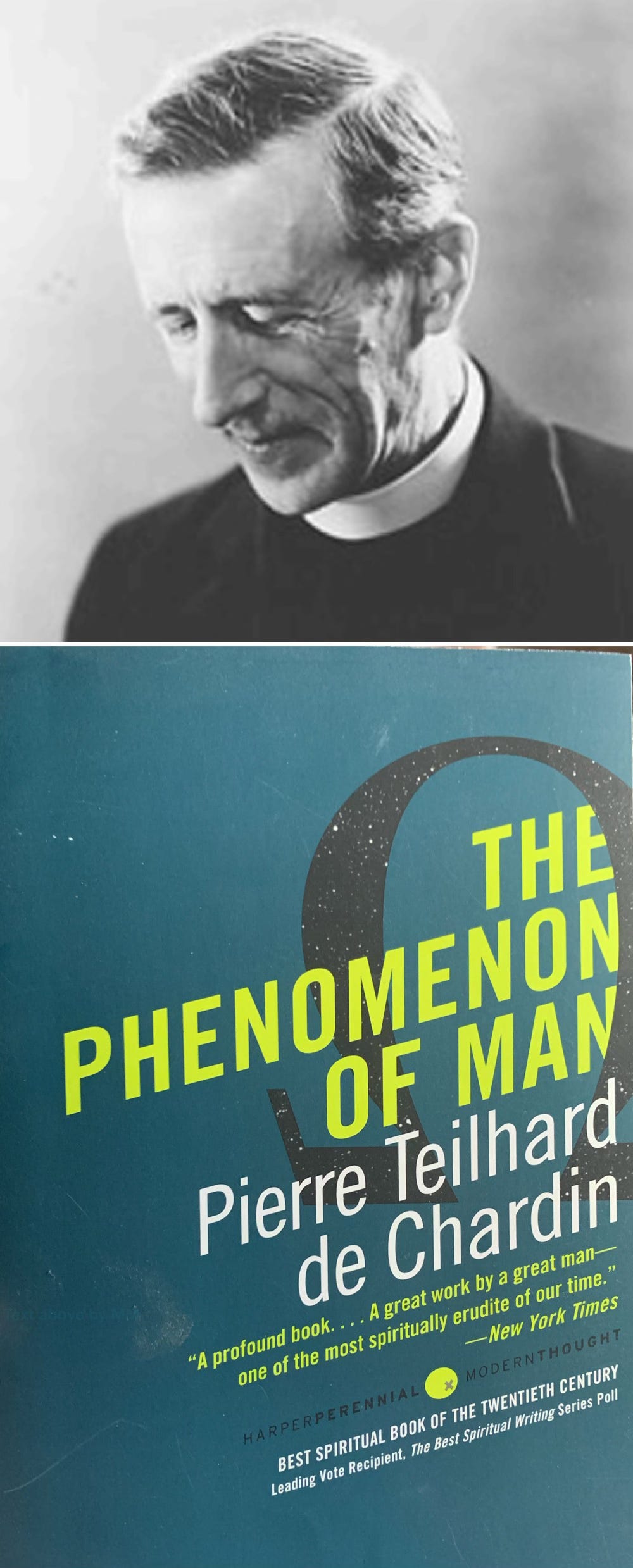
4. The Phenomenon of Man – Pierre Teilhard de Chardin
Teilhard was a priest and scientist seeking to integrate evolution, consciousness, and spiritual development into a single view. He treats human history as a process that is moving toward greater complexity and awareness, and he introduces the idea of the “noosphere,” a sphere of mind that grows as human beings link and reflect together. It is a strange book in the best sense, and it forces you to think in longer arcs than a news cycle.
You read Teilhard to stretch your sense of time and scale. You do not have to agree with his theology or his conclusions to feel the effect. He invites you to see our current information storm as one phase in a much larger story of how human consciousness develops. The Whirl is not just about tactics or quarters. It is about how people adapt mentally, morally, and spiritually in an age where information is the air. Teilhard gives you a horizon line for that conversation, even if you end up arguing with him.
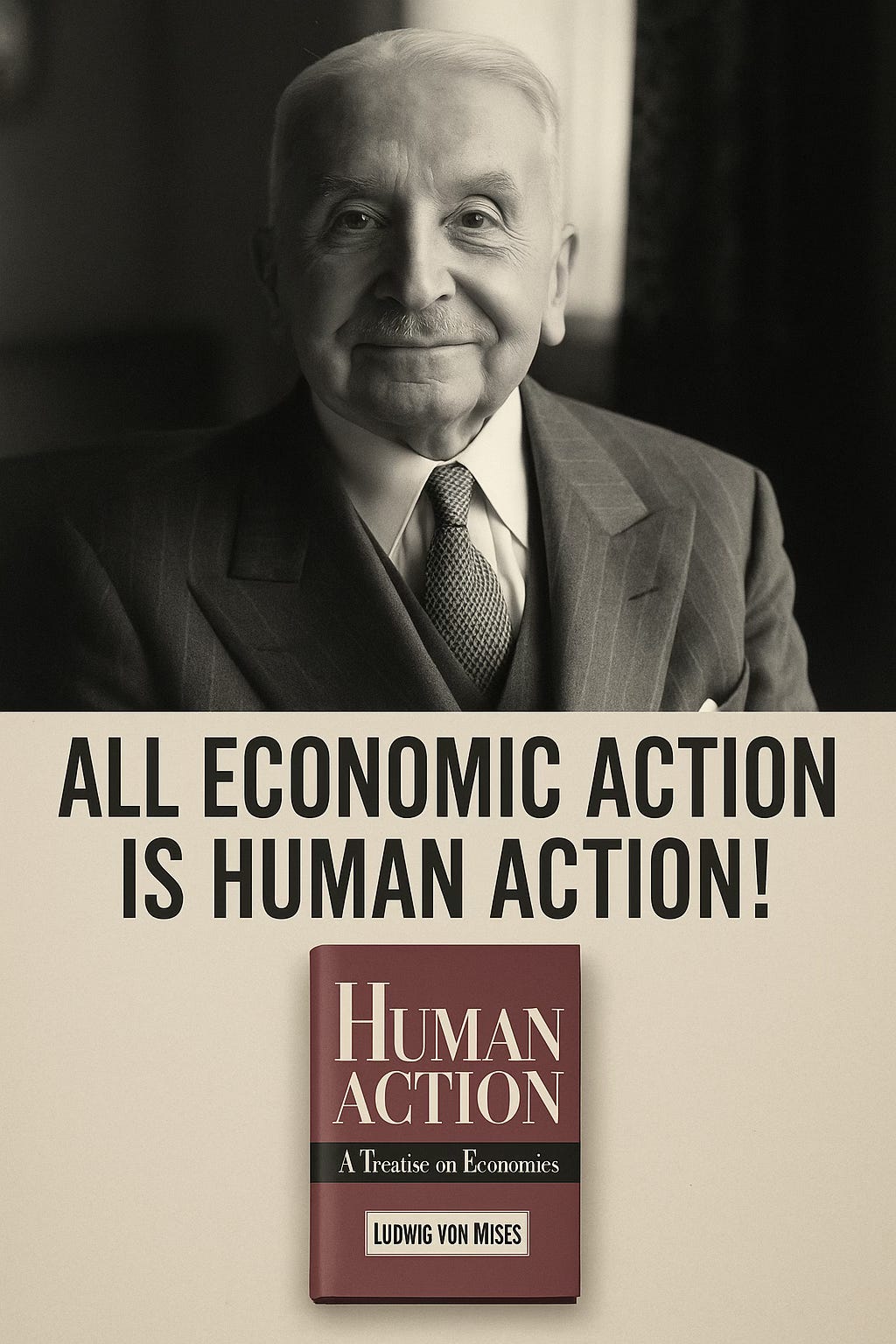
5. Human Action: A Treatise on Economics – Ludwig von Mises
Ludwig von Mises starts from a single point and refuses to let it go: human beings act on purpose. From there, he builds an entire framework for understanding markets, institutions, and social coordination. Human Action is not a textbook about statistics or GDP. It is a deep study of choice under uncertainty and of how people try to cooperate when each person only sees a small piece of the picture.
You read Mises to understand how systems of human action hold together or fall apart. He explains how prices, profits, and losses convey information in complex settings and what happens when those signals are distorted or silenced. For The Whirl, this is the piece that connects individual Orientation to large-scale behavior. Boyd helps you see how people adapt in conflict. McLuhan enables you to see how media environments shape perception. Mises helps you see how incentives and information flows shape what organizations and societies actually do.
How to use this book shelf
This is not a “top five” list for the sake of it. It is a suggested foundation. Taken together, these books teach you to distrust the emotional comfort of the crowd, to see real adaptation and maneuver, to treat media form as terrain, to think in deep time about human development, and to ground all of that in the complex reality of how purposeful action and incentives structure the world.
You do not have to read them all at once. You also do not get the full depth of The Whirl if you never read them. Pick one that pulls at you. Read it slowly with a notebook. Argue with it. Notice where it collides with your own experience. Then bring those collisions back here and use the conversations to test what you are seeing.
This shelf is baseline, not the whole stack. There are more, a lot more, books and more influences behind The Whirl, and we will keep opening that up over time. For now, start here. Then pay attention to which book grabs you first and what it opens up in how you see.
Any other books we recommend, we will add below!